

If you’ve booked a program with me, you’ve seen the instruction: come on an empty stomach, with at least four hours since your last meal. Almost everyone asks the same question — why does it matter so much? The short answer is that Hatha Yoga isn’t exercise. It’s a way of working with your own energy, and for that to happen, there should be nothing in your system but you.
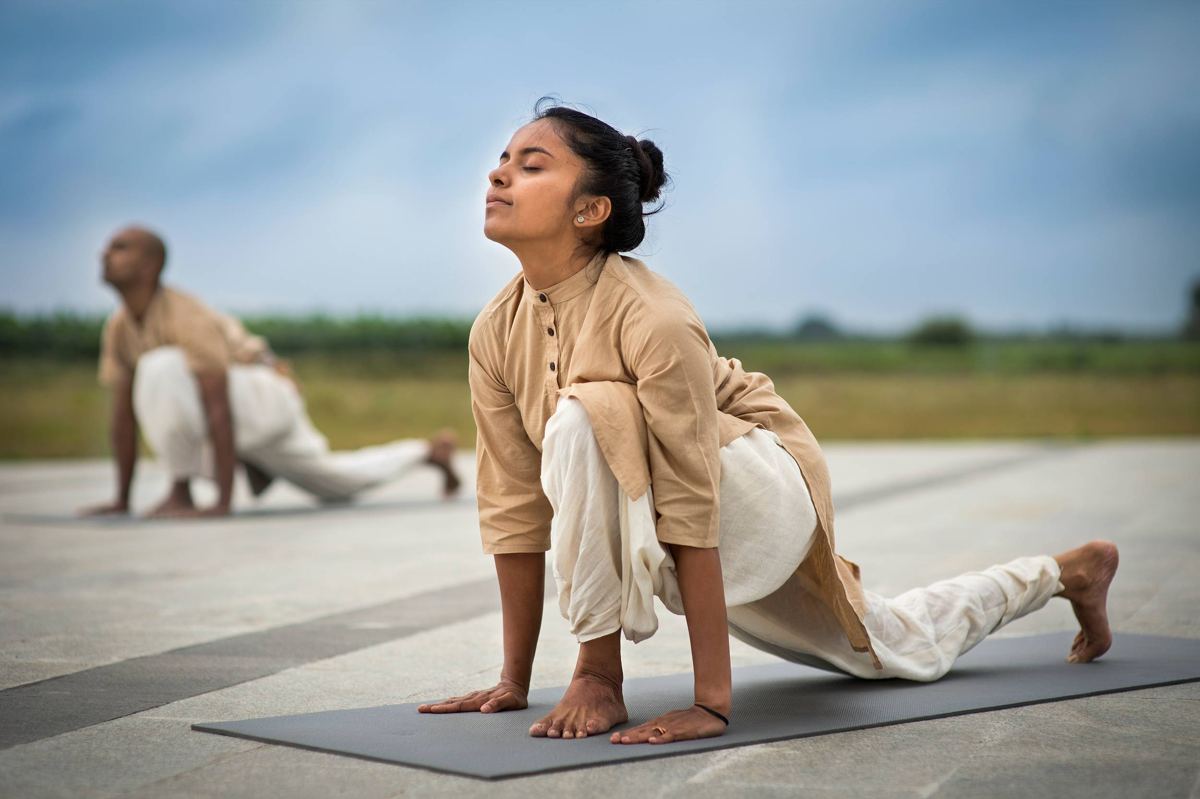
Let me explain what that actually means.
Yoga was never meant to be exercise
Somewhere along the way, yoga turned into a workout — a way to stretch, sweat, and tone up. That isn’t what these practices are. A posture held for fitness is just a posture. The same posture, done correctly and under the right inner conditions, becomes a yogasana — a tool that reorganises your system from the inside.
When you practise this way, you’re not training a muscle. You’re working with your life energy, the basic intelligence that runs your body — slowly remoulding the system, step by step, toward how you want it to be. That’s a completely different aim from a gym session, and it asks for different conditions to work.
To work with your energy, there should be only you
Here’s the part that surprises people. The food you ate an hour ago isn’t “you” yet. Your body is still breaking it down, and until that process is finished, the system treats it as something foreign — an outside substance sitting in your belly.
When you want to move your energy upward, anything that isn’t actually your body gets in the way. The body’s intelligence is occupied with the food; it won’t fully take part in the practice. Empty the stomach and there’s nothing standing in between — only your body, ready to respond. That’s the real reason behind the rule. It isn’t health advice. It’s the mechanics of what yoga is.
And traditionally it isn’t only the stomach. The classical instruction is that the bowels are empty too — which is exactly why these practices are best done in the morning, before the day’s first meal.
Why a full belly gets in the way
There’s a simpler, more obvious side to this as well. Many of these practices fold, twist, and compress the abdomen. On a full stomach that’s uncomfortable at best, and it drags your attention straight to your gut instead of the practice. The breath doesn’t move freely either when there’s a heavy meal sitting underneath it. An empty stomach simply lets the body do what the practice asks of it.
How long should you wait after eating?
A practical guide:
- After a full meal: at least 4 hours. For programs with me, this is the rule, not a suggestion.
- After something light — a piece of fruit or a small snack: 1.5 to 2 hours.
- First thing in the morning, before eating, is ideal — the body is naturally empty and most responsive.
If your program runs across a weekend, you’ll be given the exact timing for each day in your confirmation details. Follow it closely. It’s part of the practice, not red tape.
What you can have
Water is fine — in fact, stay gently hydrated through the day. Two small notes carried down from the tradition:
- Keep it tepid, close to body temperature. Ice-cold water makes the body spend energy warming it up.
- For long sessions, a little honey in your water is okay.
Nothing else belongs in the stomach. Tea, coffee, or a quick bite “just to be safe” all work against what you came to do.
A simple way to prepare
- Finish your last full meal at least 4 hours before you practise.
- Better still, practise in the morning before breakfast.
- Hydrate with tepid water, then stop sipping just before you begin.
- Wear loose, natural cotton, and arrive about 15 minutes early so you can settle.
Come and feel the difference
This is one of those things you understand far better by experiencing it than by reading about it. When the body is genuinely empty and quiet, the practice lands differently — and most people feel that the very first time.
If you’re ready to learn a complete practice in its original form, have a look at the upcoming programs, or reach out and I’ll help you choose the right starting point. Already initiated and just need to find your way back in? A Reboot re-teaches your practice from the beginning.
— Dan
Why does Hatha Yoga have to be done on an empty stomach?
Because Hatha Yoga works with your energy, not just your muscles. While the body is digesting, it treats the food as something foreign and stays busy with it — so it can’t fully take part in the practice. An empty stomach leaves only your body, ready to respond.
How many hours after eating can I practise?
At least 4 hours after a full meal, or 1.5–2 hours after something light like fruit. Early morning, before your first meal, is the ideal time. For programs with me, the 4-hour gap is required.
Can I drink water before and during yoga?
Yes. Keep it tepid — close to body temperature — and stop sipping right before you begin. For long sessions, a little honey in the water is fine. Nothing else should be in the stomach.
Can I have tea or coffee beforehand?
Best not to. Tea, coffee, or a small snack “just in case” all give the body something to process and work against the purpose of the practice.
What if I feel hungry or light-headed during practice?
A little hunger is normal and usually passes once you begin. If you ever feel genuinely unwell, ease off and let me know — but in almost every case, a properly empty stomach makes the practice clearer, not harder.